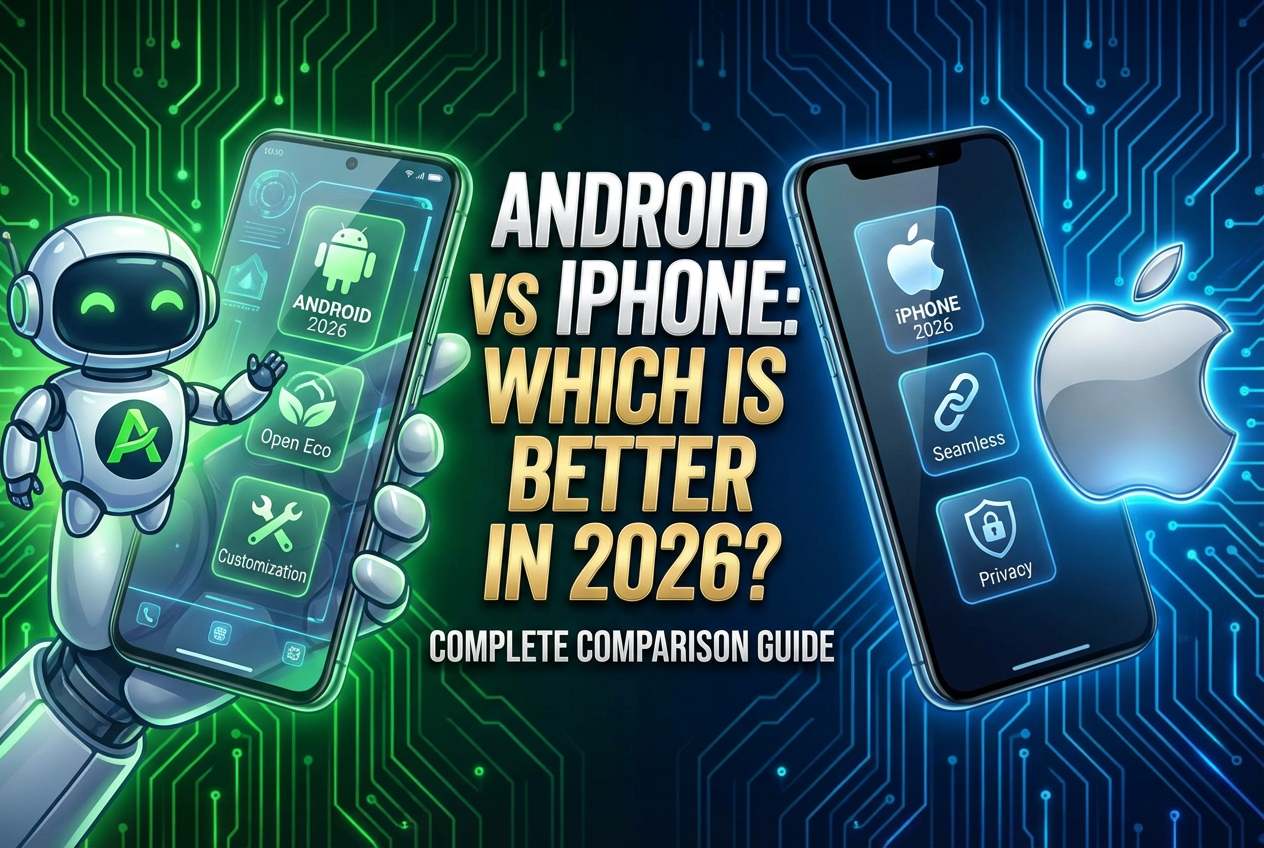
Choosing between Android and iPhone is no longer simply a decision about screen size, camera quality, or processor speed. In 2026, both platforms offer powerful hardware, advanced artificial intelligence features, strong cameras, fast connectivity, excellent displays, and long lists of useful software features. The bigger differences are found in how each operating system works and how the phone fits into a wider technology ecosystem.
Android and iPhone also approach customization, app installation, accessories, software updates, privacy controls, multitasking, and communication in different ways. Android provides devices from many manufacturers, while Apple controls both the iPhone hardware and iOS software.
The latest versions continue to expand these differences. Android 16 includes features such as notification improvements, Live Updates, adaptive refresh rate, desktop windowing on supported devices, and additional security tools. Apple’s iOS 26 introduces a new Liquid Glass design along with expanded Apple Intelligence features, Live Translation, Visual Intelligence improvements, and changes to Phone and Messages.
Different Approaches to Hardware
One of the biggest differences is the way the two platforms handle hardware.
Android is used by many manufacturers, including Samsung, Google, Xiaomi, OnePlus, Motorola, Vivo, Oppo, Honor, and others. These companies can create phones at different prices and with different designs, processors, camera systems, displays, batteries, and additional features.
The iPhone is designed and sold by Apple. Because Apple controls the hardware and operating system together, the company can tightly integrate components, software, and services.
This gives Android buyers a much wider range of choices. Someone looking for an inexpensive smartphone, a gaming-focused device, a foldable phone, an ultra-fast charging phone, or a high-end camera phone can find different Android options.
iPhone buyers have fewer hardware variations, but the selection is organized around Apple’s own product lineup.
Android Offers More Customization
Customization has traditionally been one of Android’s strongest differences.
Android users can generally change home-screen layouts, widgets, default applications, launchers, icon arrangements, keyboards, and many other parts of the interface. Individual manufacturers can also add their own customization tools.
Android 16 continues this flexible approach while introducing features such as custom keyboard shortcuts and desktop windowing on supported tablets.
iOS has become more customizable over the years. Users can personalize icons, widgets, lock screens, wallpapers, and other elements. iOS 26 expands this further with new icon appearances and additional Home Screen and Lock Screen customization.
However, Android generally gives users more freedom to change the way the operating system behaves and looks.
App Installation Works Differently
Android and iPhone also differ in how applications can be installed.
The Google Play Store is the primary source for Android applications, but Android has historically provided more flexibility for installing applications from outside the main store. Depending on the device and software version, users can install compatible application packages from other sources.
Apple has traditionally maintained a more controlled application distribution system. In some regions, Apple has introduced additional distribution options because of regulatory requirements, but the availability and rules depend on the country or region.
For most everyday users, the practical difference is that Android generally offers more flexibility, while Apple’s approach places greater emphasis on controlling the software distribution environment.
Android Comes in Many Price Ranges
Another major difference is pricing.
Android phones are available across a very broad range of prices. Entry-level devices can provide basic smartphone functionality, while premium Android models can compete directly with high-end iPhones.
This makes Android accessible to people with very different budgets. A user can purchase a relatively inexpensive Android phone and later move to a premium model without leaving the platform.
Apple focuses primarily on the iPhone family rather than covering every possible price category with new models. Older iPhones can sometimes provide a lower-cost entry into the Apple ecosystem, while current models occupy the company’s main product range.
The result is a fundamental difference in purchasing choice. Android gives consumers more manufacturers and price points, while iPhone provides a more controlled product lineup.
Software Updates Follow Different Models
Software updates are another important consideration.
Apple develops iOS specifically for its own iPhone hardware. This gives the company direct control over the relationship between the operating system and supported devices.
Android is different because Google develops the core operating system while individual manufacturers can customize it for their own phones. Update timing and support can therefore vary between manufacturers and models.
Google has also been working to improve consistency across the Android ecosystem. Its current Android materials emphasize a growing set of common features while acknowledging that device and manufacturer differences remain.
For buyers, this means it is important to check the specific manufacturer’s software-support policy rather than assuming every Android phone receives updates for the same period.
Artificial Intelligence Is Important on Both Platforms
AI has become one of the most visible areas of smartphone development in 2026.
Android devices can integrate Google’s Gemini and other AI capabilities, although availability depends on the device, hardware, software version, region, and other requirements. Google’s current Android information notes that some advanced Gemini features require specific hardware and specifications.
Apple is also expanding Apple Intelligence across the iPhone experience. iOS 26 adds more intelligent capabilities, including Live Translation, Visual Intelligence, intelligent Shortcuts actions, and other AI-powered functions.
The important difference is that AI availability is not identical across every Android phone or every iPhone. A flagship device may support capabilities that are unavailable on a less powerful model.
Therefore, when comparing phones in 2026, looking only at the operating-system name is not enough. The individual device’s processor, memory, software version, and regional availability can affect which AI features are actually available.
Android Provides More Hardware Variety
Android’s multi-manufacturer ecosystem creates another important difference in hardware innovation.
Android users can choose conventional smartphones, foldables, devices with stylus support, gaming phones, camera-focused phones, extremely fast charging systems, and many other designs.
This variety means Android can appeal to people with very specific hardware requirements.
Apple has a more controlled hardware strategy. The iPhone lineup has different sizes and specifications, but Apple maintains a consistent overall design philosophy across the range.
Neither approach is identical to the other. Android emphasizes variety, while Apple emphasizes a more unified product family.
File Management Is More Flexible on Android
Android generally provides a more open approach to file management.
Users can browse folders, download files, move documents, connect external storage devices on supported phones, and interact with files through different applications.
iOS has significantly improved its Files application and now provides a more capable file-management experience than earlier versions of the platform. However, Apple’s system still tends to place more boundaries around how applications access and manage files.
For people who frequently download documents, transfer files, manage folders, or connect external devices, Android can provide a more familiar computer-like experience.
The Ecosystems Work Differently
The wider ecosystem can be just as important as the phone itself.
Apple tightly integrates iPhone with products such as Mac, iPad, Apple Watch, AirPods, and other Apple services. Features such as continuity and device handoff can make switching between Apple devices convenient.
Android is connected to the broader Google ecosystem and also works with hardware from many manufacturers. Users can combine an Android phone with Windows PCs, Chromebooks, tablets, watches, earbuds, and devices from different companies.
Samsung and Google also offer their own ecosystems with additional cross-device features.
This means the best experience can depend heavily on what other devices you already own.
Messaging Differences Still Matter
Messaging is another area where the two platforms have historically followed different paths.
Apple’s Messages app is deeply integrated into the iPhone ecosystem, while Android users commonly use Google Messages and RCS-supported communication.
Android has continued expanding RCS capabilities, while Apple has added RCS support to iPhone messaging. iOS 26 also introduces additional communication features, including improvements to Phone and Messages and tools designed to reduce unwanted interruptions.
The experience can still vary depending on the devices, carriers, regions, and messaging services involved.
For people who communicate heavily with family and friends using different phone platforms, cross-platform messaging support can be an important consideration.
Privacy and Security Take Different Approaches
Both Android and iPhone provide extensive privacy and security controls, but their approaches are different.
Apple frequently emphasizes tightly controlled hardware and software integration, privacy protections, permissions, and on-device processing for supported features.
Android also includes extensive security controls. Android 16, for example, includes Advanced Protection and Identity Check features designed to add additional safeguards against certain threats.
Android’s open ecosystem means security can vary depending on the manufacturer, software version, application source, and device support period.
For either platform, keeping the operating system updated, using strong authentication, installing applications carefully, and reviewing permissions remain important security practices.
Gaming Can Be Excellent on Both
Modern Android and iPhone models can provide strong gaming performance.
High-end Android phones often provide features aimed specifically at gamers, including high-refresh-rate displays, gaming modes, advanced cooling systems, large batteries, and performance controls.
iPhones can also provide powerful gaming performance because Apple controls the hardware and software combination. Apple has also introduced a dedicated Games app in iOS 26 that provides a central place for games, events, friends, and Apple Arcade content.
The actual gaming experience depends on the individual phone rather than simply whether it is Android or iPhone. Processor performance, thermal management, display refresh rate, game optimization, battery capacity, and controller support can all matter.
Cameras Are About More Than Megapixels
Camera comparisons between Android and iPhone can become complicated because both platforms include phones with very different camera systems.
Some Android manufacturers emphasize large camera sensors, long-range zoom, high-resolution sensors, manual controls, and computational photography.
Apple focuses heavily on image processing, video recording, color consistency, and integration between hardware and software.
Modern phones on both platforms can produce excellent photographs and videos. The better choice for a particular person depends on whether they prioritize zoom, portrait photography, low-light performance, video, manual controls, social-media compatibility, or other camera features.
Looking at real camera performance is therefore more useful than comparing megapixel numbers alone.
Battery and Charging Can Be Very Different
Android manufacturers often compete heavily on battery capacity and charging technology. Some models provide extremely fast wired charging, large batteries, wireless charging, or reverse wireless charging.
iPhone models also provide wired and wireless charging, but Apple follows its own charging strategy and accessory ecosystem.
Battery life depends on much more than battery capacity. Processor efficiency, display technology, software optimization, network conditions, brightness, applications, and user behavior all affect how long a phone lasts.
As a result, a phone with a larger battery does not automatically provide proportionally longer battery life.
Which Platform Has More Features
Counting features is not particularly useful because Android and iPhone often solve the same problems in different ways.
Android generally gives users more hardware options, deeper customization, greater file-management flexibility, and a wider range of manufacturers.
iPhone provides a more tightly integrated combination of hardware, iOS, Apple services, and other Apple products. Apple also controls the software experience across its supported iPhone lineup.
In 2026, both platforms have become highly capable. Android 16 and iOS 26 each include modern AI, privacy, productivity, communication, and customization improvements.
Android vs iPhone in Everyday Use
The biggest difference is ultimately the philosophy behind each platform.
Android gives users more choice. There are many manufacturers, designs, price ranges, hardware configurations, and customization possibilities. The platform can be adapted to different types of users and different budgets.
iPhone offers a more controlled experience. Apple manages the hardware and operating system together and connects the iPhone closely with its wider ecosystem.
Both approaches have evolved considerably. iOS has become more customizable, while Android has continued to improve consistency, security, and software integration.
The right comparison therefore depends on what matters to you personally. Someone who values customization and hardware variety may focus heavily on Android’s flexibility. Someone already using a Mac, Apple Watch, or iPad may place more importance on Apple’s ecosystem integration. A person who wants a specific camera, charging system, foldable design, or price point may find that individual Android models offer options unavailable in Apple’s lineup.
Instead of treating Android and iPhone as completely different worlds, it is more useful to see them as two mature smartphone platforms with different priorities. In 2026, both offer powerful hardware, advanced software, AI capabilities, strong security features, and extensive app ecosystems. The meaningful differences are in how much control, variety, integration, and flexibility each platform gives you.