
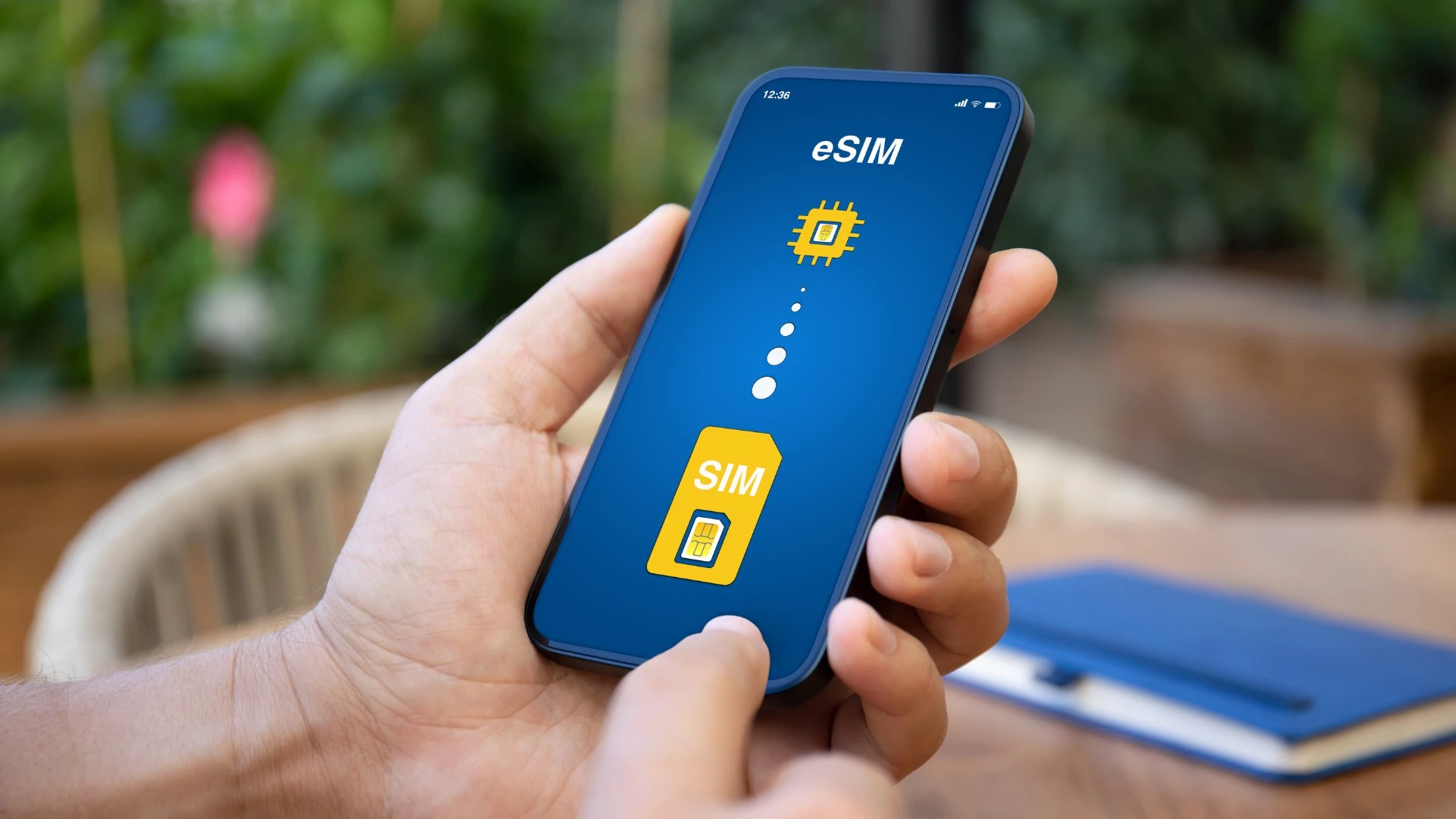
The traditional SIM card has been a basic part of mobile phones for decades, but smartphones are gradually changing how mobile connectivity is activated. One of the biggest developments is eSIM technology, which removes the need for a small removable plastic SIM card while keeping the same basic purpose of connecting a phone to a mobile network.
In India, major telecom operators including Jio, Airtel, and Vi offer eSIM services for compatible devices. Users can convert eligible physical SIM connections to eSIM and activate their mobile number digitally, although the exact procedure and requirements differ between operators.
For people buying a new smartphone, using two numbers, traveling, or simply wanting to avoid handling a physical SIM, understanding eSIM can be useful. The technology may sound complicated, but the basic idea is quite simple.
What Is an eSIM
eSIM stands for embedded SIM. Unlike a traditional SIM card that you physically insert into a phone, an eSIM is built into the device and can be digitally programmed with a mobile operator’s SIM profile.
The eSIM performs the same basic job as a physical SIM. It identifies your mobile subscription to the network so that you can make calls, send messages, and use mobile data.
Jio describes an eSIM as an embedded SIM that allows a mobile subscription to be activated on an eSIM-enabled device without using a physical SIM card.
The important distinction is that the physical SIM card is replaced by an embedded component inside the device. Your mobile number and network service can then be associated with a digital SIM profile that is downloaded to the device.
How Does eSIM Work
An eSIM works through a digitally downloaded carrier profile. When you request an eSIM from a supported telecom operator, the operator verifies your identity and provides the information required to activate the service.
Depending on the operator and device, activation may involve scanning a QR code, receiving an eSIM profile notification, or following instructions directly through the phone’s settings.
Airtel explains that eSIM activation can involve scanning a QR code supplied by the operator, after which the phone downloads the configuration needed for the mobile connection.
The physical SIM card is therefore not required for the mobile network to identify the subscription. Once the eSIM profile is installed correctly, the phone can connect to the operator’s network in much the same way as it would with a physical SIM.
Is eSIM Available in India
Yes. eSIM services are available from major Indian telecom operators, including Jio, Airtel, and Vi, for supported devices and eligible connections.
Jio provides eSIM activation and conversion options through its MyJio application and other supported methods. Airtel provides an eSIM request process through the Airtel app, while Vi provides eSIM activation through its app or SMS-based procedures.
Availability can depend on the device, operator, account type, and region. Therefore, it is important to check the current requirements of your particular operator before beginning the conversion process.
What Do You Need for eSIM
The first requirement is an eSIM-compatible phone. Not every smartphone contains the hardware necessary to use eSIM.
You also need a supported mobile operator and an eligible mobile connection. The operator may require your email address to be registered because activation information or a QR code can be delivered electronically.
Another important identifier is the EID. An EID is a unique identification number associated with the eSIM hardware in a compatible device. Jio and Airtel both use the device EID during their eSIM activation processes.
You can often find the EID in the phone’s settings. On many compatible devices, dialing *#06# can also display the EID alongside other device identifiers.
How to Convert a Jio SIM to eSIM
Jio provides a digital process for converting an existing physical SIM to eSIM.
According to Jio’s current instructions, users can open the MyJio application, search for eSIM, select the Switch to eSIM option, verify their email address, and enter the EID of the device where they want to activate the eSIM. An OTP is then used to authenticate the request.
Jio currently requires a two-hour cooling period after submitting the request. After that period, the user receives an automated call to confirm the request. Once the process is completed, the eSIM profile can be installed on the compatible device.
The exact screens can change as the MyJio application is updated, so users should follow the instructions displayed inside the app at the time of activation.
How Airtel eSIM Activation Works
Airtel also provides a digital process for converting an existing Airtel SIM to eSIM.
The current Airtel process begins through the Airtel app. Users select the option to upgrade to eSIM, choose whether the eSIM will be activated on the current device or another compatible device, and provide the required EID. An OTP and additional verification are then required before the eSIM can be configured.
After the request is completed, the eSIM can be installed through the phone’s network settings. The exact menu varies between Android manufacturers and iPhones.
Airtel also warns users not to delete the eSIM profile casually because removing it can disconnect the mobile service and may require additional assistance to restore the connection.
How Vi eSIM Activation Works
Vi also supports eSIM on compatible devices and provides activation procedures for eligible customers.
Vi’s current process includes verifying the mobile number, providing the device’s EID, confirming the request, and downloading the eSIM profile through the device after the request has been processed. The profile can also be supplied through a QR code sent to the registered email address, depending on the activation method.
Vi also notes that regional availability can differ. Its current information lists certain states and regions where eSIM service is not available, so users should verify eligibility before starting the process.
This is a good example of why eSIM procedures should be checked directly with the operator rather than relying on an old activation guide.
Can You Convert a Physical SIM to eSIM
Yes, supported operators allow eligible customers to convert a physical SIM connection to eSIM.
The mobile number generally remains the same. The change is the method by which the subscription is stored and activated on the device.
Jio explicitly allows customers to move an existing physical SIM to eSIM, while Airtel and Vi also provide conversion processes for eligible connections.
The important thing is to follow the complete activation process. Do not remove the physical SIM or delete an existing eSIM profile prematurely if the operator’s instructions tell you to keep the current connection active during the transition.
Can eSIM Be Used With Dual SIM
Many modern smartphones support dual-SIM functionality using combinations of physical SIM and eSIM, or multiple eSIM profiles depending on the device.
This can allow users to maintain separate numbers for personal and work purposes or use one number for calls and another for mobile data.
Jio states that multiple eSIMs can be activated on compatible devices, although the number that can be active at the same time depends on the particular device.
The same general principle applies across smartphones. Always check the manufacturer’s specifications because eSIM storage and active-line limits are not identical on every phone.
What Are the Benefits of eSIM
One major benefit is convenience. There is no tiny plastic card to insert, remove, or store.
An eSIM can also make it easier to use two mobile connections when your phone supports dual-SIM functionality. This can be useful for people who want separate numbers for personal and professional communication.
Another advantage is that the eSIM cannot be physically removed from the phone like a traditional SIM. Airtel notes that this can provide an additional security benefit because someone who steals the phone cannot simply remove the SIM card and place it into another handset.
eSIM can also be useful for international travel because compatible devices can support additional mobile plans without requiring another physical SIM card slot.
Does eSIM Improve Network Speed
No. Switching from a physical SIM to eSIM does not automatically make your mobile internet faster.
Airtel explains that physical SIM and eSIM technology serve the same basic purpose of connecting the user to the mobile network, meaning network performance is primarily influenced by factors such as coverage, network technology, device capabilities, and operator conditions rather than whether the SIM is physical or embedded.
If your phone supports 5G and your operator provides compatible 5G service, an eSIM can be used for that connection when the relevant requirements are satisfied.
The eSIM itself is not a speed upgrade.
Is eSIM More Secure
eSIM provides some physical security advantages because there is no removable SIM card that can simply be taken out of the phone.
For example, if someone gets hold of a phone containing a physical SIM, they may be able to remove the card and insert it into another compatible device. An embedded SIM does not work that way.
However, eSIM does not make a phone completely immune to theft, fraud, or account takeover. Users should still use a strong screen lock, protect their email account, avoid sharing verification codes, and follow their operator’s security procedures.
The EID and other activation information should also be handled carefully. Airtel specifically advises customers not to share their EID with others because of the potential security implications.
What Happens if You Change Phones
Moving an eSIM to another phone is possible when both the operator and devices support the relevant transfer process.
The procedure is not always identical to moving a physical SIM. With a physical SIM, you can normally remove the card and insert it into the new device. With eSIM, you may need to request a transfer or download a new eSIM profile.
Jio currently supports eSIM transfers between compatible devices and provides specific instructions for supported Android transfers. Its process can involve both phones, Wi-Fi, Bluetooth, device security settings, and verification steps.
This means users should not delete an eSIM from their old phone until they understand how the new-device activation will work.
What Happens if You Delete Your eSIM
Deleting an eSIM profile removes the mobile subscription profile from the device. It does not mean that the mobile number itself necessarily disappears, but you may lose network service on that device until the operator provides a replacement or new profile.
Jio states that customers who delete their Jio eSIM profile and lose network service may need to visit a Jio store with valid identification and the device for reactivation.
Airtel similarly advises users to seek assistance if an eSIM profile has been deleted and a replacement is required.
For this reason, the Delete eSIM option should never be treated like a normal cleanup button.
eSIM vs Physical SIM
The main difference is how the SIM is stored.
A physical SIM is a removable chip that you insert into a SIM tray. An eSIM uses an embedded component inside the device and receives the operator’s profile digitally.
Both can provide calls, SMS, and mobile data. Both depend on the same mobile network infrastructure. The major differences are convenience, installation, device compatibility, and how the connection is transferred between phones.
Physical SIMs remain useful because they can be moved quickly between compatible phones. eSIMs can provide greater flexibility for supported devices but may require an operator-specific digital activation process when changing devices.
Is eSIM Worth Using in India
eSIM can be a convenient option if your smartphone supports it and your operator provides the service in your area.
It can be particularly useful for dual-SIM users, people who frequently change mobile plans, travelers, and users who want to avoid handling a physical SIM card.
However, there is no requirement for everyone to switch to eSIM. Physical SIM cards remain widely supported, and they can still be more convenient when frequently moving a number between different phones.
The decision largely comes down to your device, operator, usage habits, and preference.
Understanding eSIM Before Switching
eSIM is essentially a digital way of activating a mobile subscription on hardware that is already built into your smartphone. It does not replace the mobile network itself and does not automatically provide faster internet. Instead, it replaces the removable SIM card with a digitally managed SIM profile.
In India, Jio, Airtel, and Vi currently provide eSIM options for supported devices and eligible customers, but their activation procedures, verification requirements, and regional availability can differ.
Before converting your number, check that your phone supports eSIM, confirm the operator’s current requirements, keep access to your registered email and mobile number, and carefully follow the activation instructions.
For users with compatible smartphones, eSIM can make mobile connectivity more flexible while eliminating the need to handle a small physical SIM card. As more smartphones support the technology, it is becoming a practical alternative to the traditional SIM rather than simply an experimental feature.